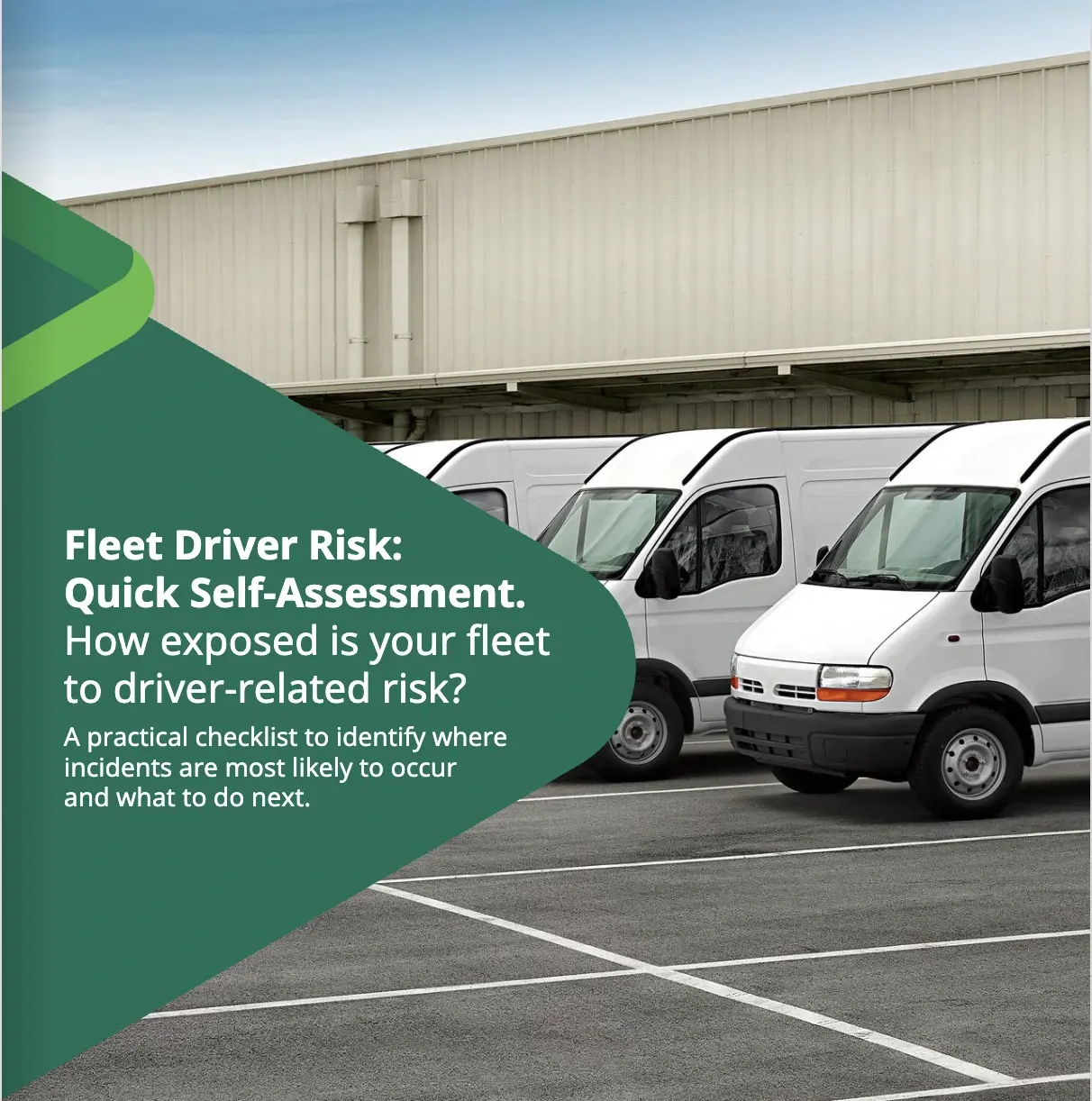
Fleet operators are under pressure from both sides. Deliver faster, but reduce incidents.
The assumption is you have to choose one. Push for efficiency and accept higher risk, or tighten safety and slow everything down.
In reality, most driver risk doesn’t come from speed alone. It comes from a small number of predictable issues that can be addressed without disrupting delivery schedules.
Not sure where your biggest risks sit?
Where driver risk actually comes from
Incidents rarely happen because of one-off mistakes. They are usually the result of patterns that build up over time.
Time pressure is one of the biggest contributors. When routes are unrealistic or schedules are too tight, drivers start making trade-offs. That might mean rushing between stops, skipping checks, or driving while fatigued.
Consistency is another challenge. Many fleets operate across multiple sites, teams or subcontractors. Standards vary, expectations are unclear, and behaviour becomes inconsistent across the fleet.
There is also a lack of visibility. Without a clear view of driver behaviour, risk often goes unnoticed until an incident happens.
As a result, many organisations fall into reactive management. Issues are only addressed after something goes wrong, rather than being prevented in the first place.
Why slowing down isn’t the answer
A common response to incidents is to slow everything down. Reduce targets, add more controls, increase checks.
On paper, this makes sense. In practice, it rarely delivers the intended result.
Slower routes do not automatically lead to safer outcomes. Drivers often compensate in other ways. They may rush later in the day, take shortcuts, or skip basic safety steps to stay on schedule.
At the same time, operational inefficiencies start to build. Delays increase pressure elsewhere in the system, which can create new risks rather than reduce them.
The issue isn’t speed alone. It’s how risk is managed within the operation.
What high-performing fleets do differently
Fleets that successfully reduce incidents without impacting performance take a different approach.
They focus on targeted risk reduction rather than applying blanket rules across the entire operation. Not every driver, route or task carries the same level of risk, and treating them as if they do leads to wasted effort.
They prioritise high-risk areas. That might be specific drivers, locations, vehicle types or times of day where incidents are more likely.
Most importantly, they align safety with operational KPIs. Safety is not treated as a separate function. It is built into how performance is measured and managed.
Want to benchmark your approach?
Practical ways to reduce risk without disruption
Reducing driver risk does not require a complete overhaul of your operation. Small, targeted changes can make a significant difference.
Start with risk-based driver training. Generic, one-size-fits-all training rarely changes behaviour. Focus instead on the drivers and scenarios that present the highest risk.
Introduce regular vehicle condition checks that are simple and consistent. These do not need to be time-consuming, but they need to be done properly and embedded into daily routines.
Set clear, practical safety expectations. Drivers should understand exactly what is expected of them, without ambiguity or unnecessary complexity.
Use data to identify where risk sits within your fleet. This could include incident reports, near misses, vehicle damage or driver feedback. The goal is to focus effort where it will have the greatest impact.
What good looks like
When risk is managed effectively, the results are clear.
Incident rates reduce without affecting delivery times. Drivers behave more consistently, regardless of location or team. Management spends less time reacting to issues and more time improving performance.
Safety and efficiency stop competing with each other. They start reinforcing each other.
Take the first step
Most fleets already have the data and insight they need. The challenge is turning that into a clear, structured approach.
Understand where your risk sits and what to prioritise next.
Or, if you want a more detailed view:
Identify your highest-risk areas and get a clear, structured plan to reduce them — without disrupting operations.